The Concert Etude for Trumpet‚ composed by Alexander Goedicke‚ is a cornerstone of trumpet repertoire‚ known for its technical and lyrical challenges. Available in PDF and MIDI formats‚ it remains a favorite among musicians‚ offering a rich musical experience for both performance and study.
Overview of the Concert Etude
The Concert Etude for Trumpet‚ composed by Alexander Goedicke‚ is a renowned piece in the trumpet repertoire‚ celebrated for its technical demands and lyrical beauty. It is structured as a single movement‚ marked Allegro‚ and features contrasting sections that showcase the performer’s agility and expressive capabilities. The etude is typically performed with piano accompaniment‚ though MIDI versions are also available for practice purposes. Its composition emphasizes a balance between virtuosic passages and melodic phrasing‚ making it a staple in both educational and performance settings. The piece is widely available in PDF format‚ allowing easy access for musicians worldwide. Its popularity endures due to its challenging yet rewarding nature‚ making it a favorite among trumpet enthusiasts and professionals alike.
Importance of the Concert Etude in Trumpet Repertoire
The Concert Etude by Alexander Goedicke holds a prominent place in trumpet repertoire‚ serving as a cornerstone for developing technical and musical skills. Its challenging passages and lyrical sections make it an essential piece for refining articulation‚ phrasing‚ and dynamic control. Trumpet players often use this etude to prepare for auditions‚ competitions‚ and recitals‚ as it showcases both virtuosity and expressive ability. The piece is widely regarded for its ability to assess a performer’s mastery of the instrument‚ making it a staple in educational settings. Its popularity endures due to its balanced blend of technical demands and musicality‚ ensuring its relevance for both students and professionals. The availability of the Concert Etude in PDF and MIDI formats further enhances its accessibility‚ solidifying its role as a fundamental work in trumpet literature.
Composer Background: Alexander Goedicke
Alexander Goedicke (1877–1957) was a Russian composer and pianist‚ renowned for his contributions to trumpet repertoire‚ particularly the Concert Etude‚ a staple in trumpet literature.
Biography of Alexander Goedicke
Alexander Goedicke (1877–1957) was a Russian composer and pianist‚ best known for his contributions to classical music‚ particularly in the trumpet repertoire. Born in Moscow‚ he began his musical journey at an early age‚ studying piano and composition at the Moscow Conservatory. Goedicke’s career spanned multiple roles‚ including as a professor of piano and composition‚ and he was highly regarded for his technical mastery and lyrical style. His compositions often blended traditional Russian influences with innovative techniques‚ making his works both accessible and challenging for performers. The Concert Etude‚ Opus 49‚ remains one of his most celebrated pieces‚ showcasing his ability to craft intricate melodies and demanding technical passages. Goedicke’s legacy endures through his music‚ which continues to inspire trumpet players worldwide. His life’s work reflects a deep dedication to musical excellence and innovation.
His Contributions to Trumpet Music
Alexander Goedicke significantly enriched the trumpet repertoire with his compositions‚ particularly the Concert Etude‚ Opus 49. This piece is celebrated for its technical demands and lyrical beauty‚ making it a staple in trumpet education and performance. Goedicke’s music often blends Russian Romanticism with innovative techniques‚ creating works that challenge and inspire trumpet players. His compositions are known for their balance of technical brilliance and emotional depth‚ which has solidified their place in classical trumpet literature. The Concert Etude‚ available in PDF and MIDI formats‚ remains a favorite among musicians‚ offering a rich musical experience for both study and performance. Goedicke’s contributions have left a lasting legacy‚ ensuring his music continues to influence trumpet players and educators worldwide.
Structure of the Concert Etude
The Concert Etude for Trumpet is structured as a single-movement work‚ typically in Allegro tempo‚ featuring a blend of technical passages‚ lyrical melodies‚ and dynamic contrasts‚ with accompaniment options.
Allegro Movement Analysis

The Allegro movement of Goedicke’s Concert Etude is a technically demanding piece‚ showcasing the trumpet’s agility and expressive range. It begins with a lively tempo‚ requiring precise articulation and control. The music features intricate arpeggios‚ rapid scales‚ and dynamic contrasts‚ challenging even advanced players. A key element is the legato phrasing in the lyrical sections‚ which must be executed smoothly to maintain musicality; The movement also includes dramatic crescendos and subtle diminuendos‚ emphasizing the importance of dynamic control. Trumpet players must master both the technical brilliance and the nuanced phrasing to deliver a compelling performance. The Allegro movement is often accompanied by a piano or MIDI arrangement‚ providing harmonic support while allowing the trumpet to take center stage. This movement remains a staple in trumpet repertoire‚ admired for its balance of virtuosity and musical depth.
Leggero and Crescendo Sections
The leggero and crescendo sections in Goedicke’s Concert Etude are pivotal‚ showcasing the trumpet’s dynamic range and tonal versatility. The leggero section‚ marked mf leggero‚ requires a light‚ airy approach‚ with precise articulation to maintain clarity. This section highlights the player’s ability to produce a bright‚ yet controlled sound. The crescendo sections gradually build intensity‚ demanding careful breath control and embouchure strength to navigate the rising dynamics seamlessly. These passages are technically challenging‚ as they combine intricate fingerings with sustained notes‚ testing endurance and musicality. The interplay between leggero and crescendo sections creates a dramatic contrast‚ essential for conveying the piece’s emotional depth. Proper phrasing and dynamic balance are crucial to deliver a compelling performance‚ making these sections a focal point for trumpet players aiming to master the etude.
MIDI Accompaniment Integration
The Concert Etude for Trumpet by Alexander Goedicke is often accompanied by MIDI files‚ providing a digital piano accompaniment that enhances practice and performance. These MIDI files offer a realistic and adjustable backing track‚ allowing trumpet players to rehearse with precise tempo control and dynamic balance. The integration of MIDI technology makes it easier for musicians to master the etude’s challenging passages‚ such as the leggero and crescendo sections‚ by enabling repetitive practice at variable speeds. Additionally‚ MIDI accompaniment helps in developing a strong sense of rhythm and phrasing‚ which are critical for delivering a polished performance. Many sheet music PDFs include links to download MIDI files‚ making this resource widely accessible for both students and professionals. This modern tool bridges tradition and innovation‚ supporting the mastery of Goedicke’s timeless composition.
Performance Considerations
Performing the Concert Etude requires precise tempo control and dynamic balance‚ particularly in the Allegro movement. Musicians must master leggero and crescendo sections for a polished execution.
Tempo and Dynamics
The Concert Etude for Trumpet demands meticulous attention to tempo and dynamics to achieve its dramatic contrasts. The Allegro movement requires a brisk tempo‚ while leggero sections call for a light‚ airy touch; Dynamics range from delicate pianissimo passages to powerful fortissimo climaxes‚ emphasizing the trumpet’s expressive capabilities. Musicians must carefully balance these elements to maintain the piece’s structural integrity and emotional depth. The interplay between the trumpet and piano accompaniment further highlights the importance of dynamic control‚ ensuring a cohesive and engaging performance. Proper adherence to tempo markings and dynamic instructions is essential for capturing the etude’s technical and artistic essence.
Articulation and Phrasing
Articulation and phrasing in the Concert Etude for Trumpet are critical for conveying the music’s lyrical and technical demands. The etude requires precise articulation‚ with clear distinctions between legato and staccato passages. Leggero sections demand a light‚ detached touch‚ while crescendo moments call for a more forceful‚ defined articulation. Phrasing must be carefully shaped to highlight the melodic contours‚ ensuring a natural flow and emotional expression. Trumpet players must pay close attention to breath control and tonguing techniques to maintain clarity and consistency. The interplay between the trumpet and piano accompaniment further emphasizes the importance of cohesive phrasing. Proper articulation and phrasing not only enhance the technical brilliance of the piece but also bring out its musical depth and nuance‚ making it a standout work in the trumpet repertoire.
Practice Tips for Mastery
Mastery of the Concert Etude for Trumpet requires disciplined practice and a focused approach. Begin by practicing at a slower tempo to ensure accuracy and control‚ gradually increasing speed as confidence grows. Use a metronome to maintain precise timing‚ especially in the Allegro movement. Break the piece into smaller sections‚ such as the Leggero and Crescendo passages‚ and practice each separately before combining them. Incorporate long tones and lip slurs to build endurance and smooth transitions. Practice with a piano accompaniment or MIDI file to refine musicality and phrasing. Record sessions to identify areas for improvement and adjust articulation and dynamics accordingly. Focus on the leggero sections to achieve a light‚ airy sound‚ and crescendo passages to develop power and control. Regular practice of scales and arpeggios will strengthen technical proficiency. Consistency and patience are key to mastering this challenging yet rewarding piece.
Sheet Music and PDF Availability
The Concert Etude for Trumpet by Alexander Goedicke is widely available in PDF format from reputable sources like H. Leeds Music. It is compatible with various devices for easy access and practice.
Sources for Downloading the PDF
The Concert Etude for Trumpet by Alexander Goedicke is available for download from various reputable sources. H. Leeds Music‚ a division of Music Sales‚ offers the official sheet music in PDF format. Additionally‚ platforms like Musicnotes and Sheet Music Plus provide high-quality downloads. These sources ensure that the PDF is formatted correctly and maintains the original composition’s integrity. Many online marketplaces and music libraries also offer the piece‚ making it easily accessible for trumpet players worldwide. When downloading‚ ensure the source is reliable to avoid unauthorized or low-quality versions. The PDF is compatible with most devices‚ allowing musicians to practice and perform seamlessly. Always verify the copyright and licensing information before downloading to support the creators and publishers.
Quality and Formatting of the PDF
The PDF of Alexander Goedicke’s Concert Etude for Trumpet is renowned for its clarity and precision. The sheet music is meticulously formatted‚ ensuring a clean and professional layout that enhances readability. The score is presented in standard musical notation‚ with clear dynamics‚ articulations‚ and tempo markings. The PDF is optimized for viewing on various devices‚ making it convenient for musicians to practice and perform. High-quality formatting ensures that the music is free from clutter‚ with proper spacing and alignment of notes. This attention to detail allows trumpet players to focus on interpretation without distractions. The PDF also retains the original composition’s intent‚ preserving Goedicke’s artistic vision. Whether for practice or performance‚ the PDF’s professional presentation makes it an essential resource for trumpet enthusiasts.
Compatibility with Different Devices
Alexander Goedicke’s Concert Etude for Trumpet in PDF format is universally compatible with a wide range of devices‚ ensuring accessibility for musicians worldwide. Whether viewed on desktop computers‚ tablets‚ or smartphones‚ the PDF retains its clarity and formatting. This versatility allows trumpet players to practice and perform seamlessly across different platforms. The PDF is also compatible with both iOS and Android devices‚ making it ideal for musicians who prefer mobile access. Additionally‚ the sheet music can be opened using various PDF readers and music apps‚ ensuring flexibility for different user preferences. This broad compatibility makes the Concert Etude PDF a practical and convenient resource for trumpet enthusiasts‚ enabling them to access the music anywhere‚ anytime‚ without compromising on quality or readability.
Historical Context of the Concert Etude
The Concert Etude‚ composed by Alexander Goedicke‚ reflects the musical trends of the mid-20th century. Published in 1946‚ it embodies the stylistic influences of its era‚ blending technical demands with lyrical expression.
Composition Date and Publication
Alexander Goedicke’s Concert Etude for Trumpet was composed in the mid-20th century‚ with its publication by MCA Music in 1946 marking a significant milestone. This piece‚ written for Bb trumpet and piano‚ reflects the musical tastes of its era‚ blending technical brilliance with lyrical expression. The etude has since become a staple in trumpet repertoire‚ celebrated for its challenging yet rewarding nature. Its availability in PDF and MIDI formats has made it accessible to modern musicians‚ ensuring its continued relevance. The Concert Etude remains a testament to Goedicke’s skill as a composer‚ offering a rich musical experience for both performers and audiences. Its publication by MCA Music solidified its place in the classical trumpet canon.
Influence of the Time Period on the Music
The Concert Etude for Trumpet‚ composed by Alexander Goedicke‚ reflects the musical influences of its time‚ blending Romantic-era expressiveness with early 20th-century technical demands. The piece captures the spirit of virtuosic display prevalent in the late Romantic period‚ while its structured form and harmonic language align with the compositional practices of the early 20th century. The etude’s Allegro movement‚ marked by brisk tempos and intricate passages‚ showcases the trumpet’s agility and brilliance‚ traits highly valued during this era. Additionally‚ the piece incorporates lyrical sections that highlight the instrument’s melodic capabilities‚ a nod to the Romantic emphasis on emotional expression. The time period’s cultural and musical trends thus shaped the etude’s technical and artistic dimensions‚ making it a quintessential work for the trumpet repertoire.
Arrangements and Transcriptions
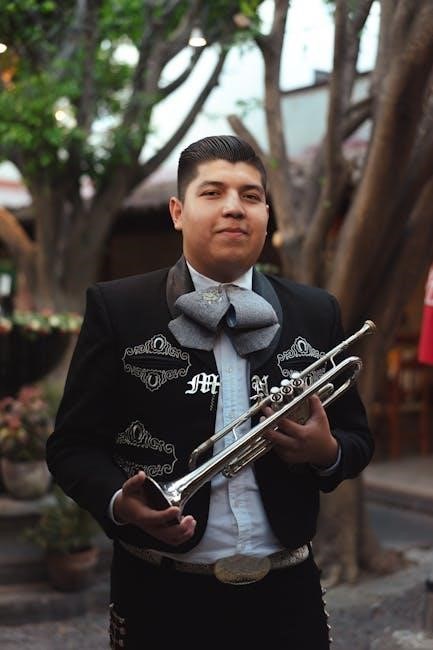
The Concert Etude is primarily arranged for Bb trumpet and piano‚ with MIDI accompaniment available. C trumpet versions exist‚ offering versatility for different performers and preferences.
Bb Trumpet vs. C Trumpet Arrangements
The Concert Etude is widely available for both Bb and C trumpets‚ each offering unique characteristics. The Bb trumpet version is more commonly performed‚ with a bright and projecting sound‚ while the C trumpet version provides a warmer tone and slightly different technical challenges. Both arrangements maintain the piece’s original intent but cater to different player preferences and instrument choices. The Bb version is often paired with piano accompaniment‚ while MIDI versions are also accessible for practice. Players may choose based on their instrument’s playability and the desired tonal quality. This versatility ensures the Concert Etude remains accessible to a broad range of trumpeters‚ whether performing in recitals or preparing for auditions.
Piano Accompaniment Variations
The piano accompaniment in Goedicke’s Concert Etude is a vital component‚ offering both rhythmic support and harmonic richness. Variations exist to suit different performance needs‚ with some arrangements featuring simplified piano parts for practice‚ while others maintain the original complexity. The interplay between the trumpet and piano is dynamic‚ with the piano often mirroring the trumpet’s melodic lines or providing a robust harmonic foundation. MIDI accompaniments are also available‚ allowing trumpeters to practice with a digital piano track. These variations ensure flexibility for performers‚ whether in rehearsals or on stage. The piano’s role is not merely accompaniment but an integral part of the musical dialogue‚ enhancing the etude’s emotional and technical depth. This adaptability makes the Concert Etude accessible to a wide range of musicians‚ from students to professionals.
Legacy of the Concert Etude
Alexander Goedicke’s Concert Etude remains a cornerstone of trumpet repertoire‚ celebrated for its technical and lyrical demands‚ and is widely used in educational and professional settings.

Popularity Among Trumpet Players
Alexander Goedicke’s Concert Etude is a beloved piece among trumpet players‚ celebrated for its technical and lyrical challenges. Its widespread availability in PDF and MIDI formats has made it easily accessible for musicians worldwide. The etude is often performed in auditions‚ competitions‚ and recitals‚ solidifying its reputation as a staple in trumpet repertoire. Many trumpet players appreciate its balance of virtuosic demands and melodic beauty‚ making it a favorite for both practice and performance. Its enduring popularity stems from its ability to showcase a player’s skill and artistry‚ ensuring its continued relevance in the trumpet community. The piece remains a cornerstone of musical education and professional development for trumpeters of all levels.
Use in Competitions and Auditions
Alexander Goedicke’s Concert Etude is frequently featured in trumpet competitions and auditions due to its demanding technical and lyrical requirements. Its availability in PDF and MIDI formats makes it easily accessible for preparation. The piece is often selected by judges to assess a player’s precision‚ tone‚ and musicality. Many musicians choose this etude for its ability to showcase both virtuosic skill and expressive phrasing. Its inclusion in major competitions highlights its significance in evaluating a trumpeter’s readiness for professional performance. The etude’s challenging nature ensures it remains a standard test piece for auditions at conservatories and orchestral tryouts. Its widespread use underscores its importance in the trumpet repertoire and its effectiveness in identifying exceptional talent.